



.svg)
AI-powered search is no longer an experiment running quietly in the background. It is now a default layer of how people discover information, evaluate options, and choose businesses.
Today, billions of users interact with AI-generated summaries, conversational answers, and map-based recommendations before they ever click a website. For businesses, this changes the objective entirely. Visibility is no longer about ranking alone. It’s about becoming a source AI systems trust, understand, and reference when answering questions.
This article explains what AI-powered search optimization actually means, how it differs from traditional SEO, and what practical steps businesses can take to remain visible as discovery continues to shift away from blue links and toward AI-generated answers.
Why AI Search Changes the Rules of Visibility
Traditional search engines trained users to browse. AI-powered search trains users to decide.
Instead of scrolling through ten results, people now ask detailed questions and receive summarized responses that feel confident and complete. Those responses often include only a handful of sources, sometimes none that are directly clickable.
For businesses, this means the competition window is smaller. AI systems typically reference just a few entities per answer. If your business is not among them, you may never enter the consideration set, regardless of how strong your traditional rankings are.
What AI Content Optimization Actually Means
AI content optimization, often referred to as generative engine optimization (GEO), focuses on improving how AI systems interpret, trust, and cite your content.
Unlike SEO, which optimizes pages to appear in ranked lists, GEO optimizes content to be used inside AI-generated answers. Success is measured not by position, but by reference frequency and accuracy.
In practical terms, AI optimization asks a different question:
Are we easy for AI systems to understand and explain?
How AI-Powered Search Differs from Traditional Search
The differences between traditional SEO and AI-powered search are structural, not cosmetic.
Traditional SEO prioritizes:
- Rankings
- Click-through rates
- Keyword targeting
- Backlinks
AI-powered search prioritizes:
- Clarity and completeness
- Contextual relevance
- Authority signals across multiple sources
- Consistency and accuracy
AI engines don’t present options equally. They evaluate and select based on confidence. That confidence comes from how clearly your business is defined across the web.
Why Citations Matter More Than Clicks
In AI-driven discovery, citations replace clicks as the primary visibility signal.
A citation does not always mean a hyperlink. It means your brand, location, or content is referenced as part of an answer. Users may never visit your site, but they may still act—calling, visiting, or booking—based on what the AI summarized.
This explains why many businesses are seeing fewer sessions but higher-quality leads. The evaluation already happened. The click is no longer the beginning of the journey—it’s the final confirmation.
Structuring Content So AI Can Understand It
AI systems parse content by breaking it into sections and analyzing how ideas connect.
Well-structured content performs better because it mirrors how AI decomposes questions. Clear headings, logical flow, and concise explanations make it easier for AI to extract relevant information.
Strong structure includes:
- Descriptive H2 and H3 headings
- Short, focused paragraphs
- Bullet points for processes or lists
- Clear separation between concepts
Unstructured blocks of text make interpretation harder for both AI and humans.
Answering Questions Before AI Has to Guess
AI engines favor content that answers questions directly and early.
When a section opens with a clear, specific answer, it reduces ambiguity. AI systems are more likely to quote or summarize content that does not require interpretation or inference.
Effective question-answer content:
- States the answer in the first paragraph
- Avoids unnecessary buildup
- Uses plain language
- Reflects how people actually ask questions
This approach improves AI visibility and user trust at the same time.
Using Data and Evidence to Increase Credibility
AI systems weigh credibility heavily when choosing what to reference.
Specific data points, statistics, and authoritative sources strengthen confidence. Vague claims weaken it. Content that includes concrete evidence is easier for AI to validate against other sources.
Strong credibility signals include:
- Referencing industry research
- Citing reputable organizations
- Including original insights or analysis
- Keeping statistics current
Fresh, accurate data signals relevance. Outdated information signals risk.
Why Structured Data Still Matters
Structured data helps AI systems understand what your content represents.
Schema markup does not guarantee visibility, but it reduces confusion. It clarifies relationships between entities, topics, and attributes.
For AI-powered search, schema is particularly useful for:
- FAQs
- How-to processes
- Articles and authorship
- Business information
When AI can easily identify questions, answers, and ownership, it becomes more confident using that information in responses.
Authority Signals Go Beyond Your Website
One of the biggest misconceptions about AI optimization is that it happens only on your site.
AI systems cross-check information across a wide ecosystem. Reviews, directories, community mentions, forums, and third-party platforms all contribute to validation.
If your business claims something on its website but those claims are not echoed elsewhere, confidence drops.
Authority is reinforced through repetition, not declaration.
Building Topical Authority Instead of Isolated Pages
AI engines prefer depth over breadth.
Rather than ranking individual pages, AI evaluates whether a business demonstrates consistent expertise in a topic area. This is where topical clusters matter.
Topical authority is built by:
- Covering core subjects thoroughly
- Answering related questions across multiple pages
- Linking concepts together logically
- Updating content as questions evolve
A business that educates consistently becomes a reference point.
Writing in a Format AI Can Quote
Some sentences are easier to reuse than others.
AI systems favor statements that stand on their own. Clear definitions, concise explanations, and specific descriptions are more likely to be quoted or summarized.
To increase quotability:
- Use complete, self-contained sentences
- Define terms clearly
- Avoid excessive jargon
- Keep explanations focused
This improves both AI extraction and human readability.
Rethinking Measurement in an AI-First World
AI-powered discovery challenges traditional analytics.
Traffic may decline even as demand increases. Attribution becomes less direct. Customers may say they found you through AI without leaving a digital trail.
Better indicators of success now include:
- Call volume
- Direction requests
- Booking conversions
- Lead quality
- Customer confidence
The goal shifts from capturing clicks to earning decisions.
Practical Steps Businesses Can Take Now
Optimizing for AI-powered search does not require a full rebuild. It requires alignment.
Start with:
- Reviewing how AI tools describe your business
- Clarifying your services, attributes, and positioning
- Structuring content around real questions
- Updating outdated information everywhere it appears
Each improvement increases AI confidence incrementally.
How Helm Supports AI-Ready Content at Scale
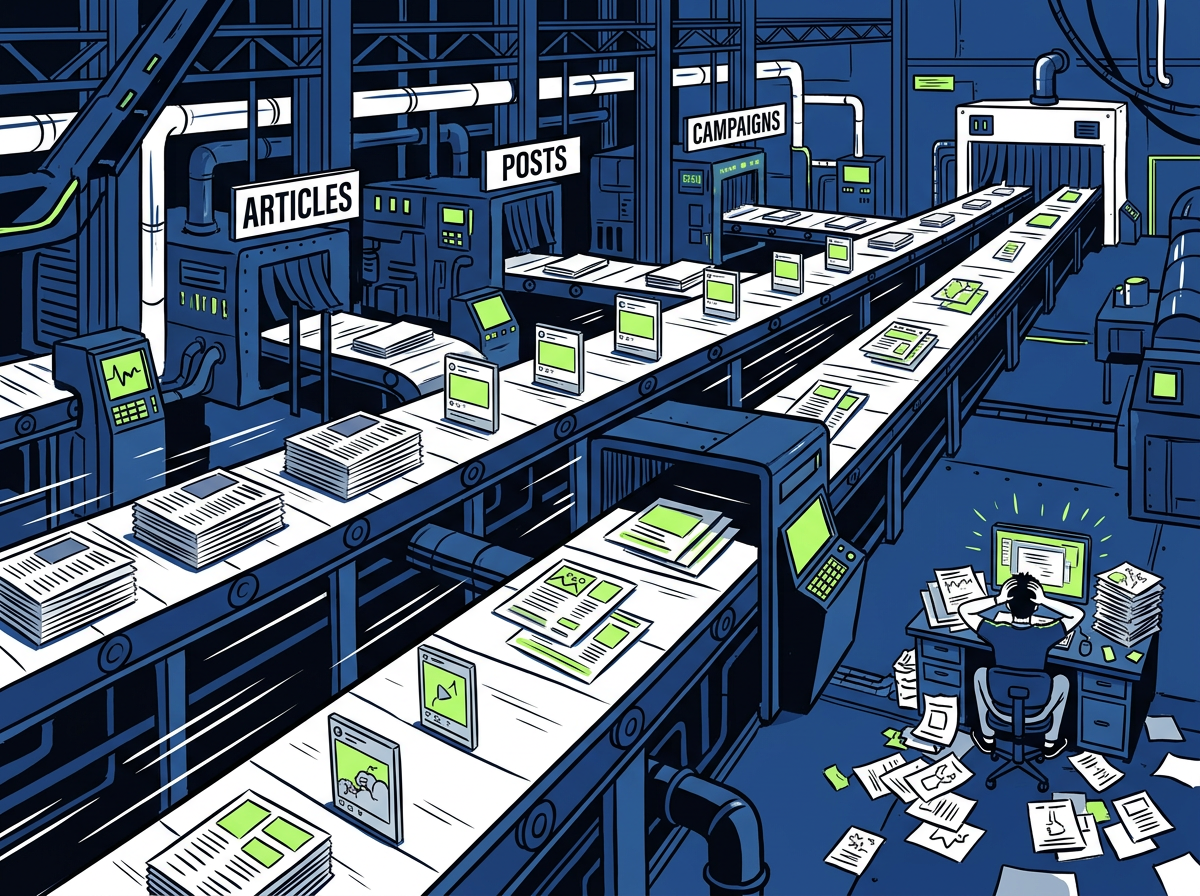
Maintaining clarity, consistency, and structured content across many pages and platforms is difficult to do manually.
Helm helps businesses and agencies systemize content creation and optimization so authority signals remain aligned over time. Instead of reacting to each algorithm shift, teams can focus on building a stable foundation that supports both SEO and AI-powered discovery.
This approach allows visibility to compound rather than reset.
AI Search Is Selecting, Not Ranking
The most important mindset shift is understanding that AI does not rank businesses the way search engines once did.
AI selects businesses it can explain confidently. That selection happens before users ever see a list of options.
If your business is unclear, inconsistent, or unsupported across the ecosystem, it will be excluded—quietly and efficiently.
Be Understandable Everywhere
Optimizing for AI-powered search is not about chasing new tactics. It is about making your business easy to understand, validate, and recommend.
Clarity builds confidence. Confidence earns citations. Citations drive decisions.
Businesses that invest in being understandable everywhere they appear will remain visible as discovery continues to evolve beyond traditional search engines.
Get free resources, access to new features, tips & tricks, and special offers by joining the Helm Newsletter.
No Spam. Sent Weekly.