



.svg)
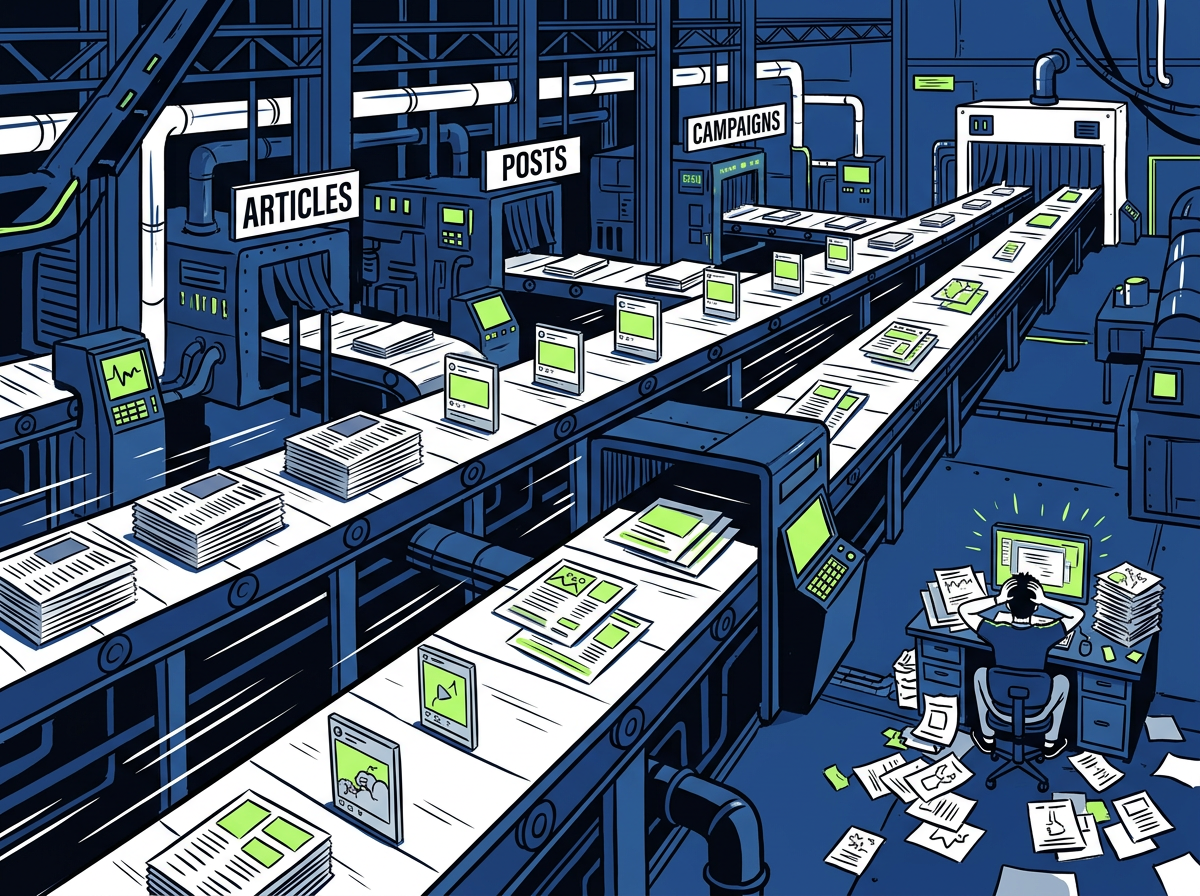
Consistency in content marketing is rarely the result of effort alone. It is usually the result of structure. Most teams start with a plan. A few topics, a rough schedule, maybe a spreadsheet to keep things organized. But as content production increases, that structure begins to break down. Deadlines slip, topics overlap, and visibility into what is actually happening becomes limited.
Over time, content stops feeling like a strategy and starts feeling reactive.
- Content operations break down at scale when there is no centralized system to maintain structure and visibility.
- Lack of real-time visibility makes it difficult to execute strategy consistently and identify gaps or overlaps.
- Using fragmented tools creates inefficiencies, misalignment, and increased operational overhead.
- Centralizing planning, scheduling, and tracking into one system improves coordination and consistency.
- A unified content system enables scalable, predictable execution without increasing complexity.
Understanding the role of visibility in content execution
A content strategy is only as effective as your ability to execute it consistently.
Without clear visibility into what is being created, scheduled, and published, it becomes difficult to:
- Maintain a steady publishing cadence
- Align content with strategic goals
- Identify gaps or overlaps in your topics
- Coordinate across teams or clients
Lack of visibility leads to missed opportunities and inconsistent output, even when the underlying strategy is sound.
Why fragmented tools create inefficiencies
Many teams rely on a mix of tools to manage content. Spreadsheets for planning, separate platforms for publishing, and manual tracking for progress.
While this approach can work initially, it introduces several inefficiencies:
- Information is spread across multiple systems
- Updates are not reflected in real time
- Scheduling conflicts become more common
- Teams spend more time managing tools than executing strategy
As content volume grows, these inefficiencies compound and slow down operations.
Moving from scattered workflows to a unified system
A more scalable approach is to centralize content operations into a single system.
Instead of managing planning, creation, and scheduling separately, everything is handled within one structured environment. This allows teams to move from reactive execution to coordinated strategy.
Within Helm, this is managed through the Content Calendar, which acts as a centralized hub for all content activity.
Rather than tracking content across multiple tools, the calendar provides a complete view of what is happening across your entire workflow.
Managing your content from a single source of truth
A centralized calendar creates a single source of truth for your content strategy.
From this view, you can:
- See all scheduled and upcoming content
- Manage multiple websites or brands independently
- Ensure that content is distributed evenly across timelines
For agencies or multi-location businesses, this separation is especially important. Each brand or site maintains its own dedicated calendar, reducing the risk of overlap or confusion .
Adapting to different planning styles
Not every team manages content the same way. Some prefer visual planning, while others rely on structured lists.
To support both approaches, the Content Calendar provides two primary views.
Using calendar view for visual planning
Calendar view offers a traditional layout where content is mapped across specific dates.
This makes it easier to:
- Understand publishing cadence at a glance
- Identify gaps in your schedule
- Adjust timelines quickly using drag-and-drop functionality
Color-coded entries also help differentiate between content types or topics, making the calendar easier to scan and manage .
Using list view for structured management
For teams that prefer a more linear approach, list view presents content in a row-based format.
This allows for:
- Quick scanning of large content queues
- Easier filtering and sorting
- A more detailed look at individual content items
Both views provide the same functionality, allowing users to switch between them depending on their workflow preferences .
Keeping track of progress without manual tracking
One of the biggest challenges in content operations is tracking progress across multiple pieces of content.
Without a centralized system, teams often rely on manual updates, which can quickly become outdated.
A built-in content summary eliminates this issue by providing real-time visibility into:
- The number of posts currently scheduled
- Content that has already been generated
- Items that are still in progress or unassigned
This level of transparency ensures that nothing is overlooked and that your content pipeline remains active and aligned with your goals .
Common mistakes that disrupt content workflows
Even with the right tools, certain mistakes can create friction in content operations:
1. Relying on disconnected systems
This leads to inconsistent data and missed updates.
2. Not maintaining a clear schedule
Irregular publishing reduces momentum and visibility.
3. Overlapping content across teams or clients
This creates confusion and weakens overall strategy.
4. Failing to track progress in real time
Delays and gaps go unnoticed until they impact results.
Avoiding these issues allows teams to maintain a more consistent and predictable workflow.
Building a content system that scales with your strategy
Content marketing becomes significantly more effective when operations are structured and visible.
A centralized system allows you to:
- Maintain consistency across all content outputs
- Adapt quickly as strategies evolve
- Scale production without increasing complexity
Within Helm, the Content Calendar is designed to support this structure by bringing planning, scheduling, and tracking into one place.
When content operations are aligned, execution becomes more predictable. As output increases, your system remains organized, allowing your strategy to scale without losing clarity or control.
Get free resources, access to new features, tips & tricks, and special offers by joining the Helm Newsletter.
No Spam. Sent Weekly.