



.svg)
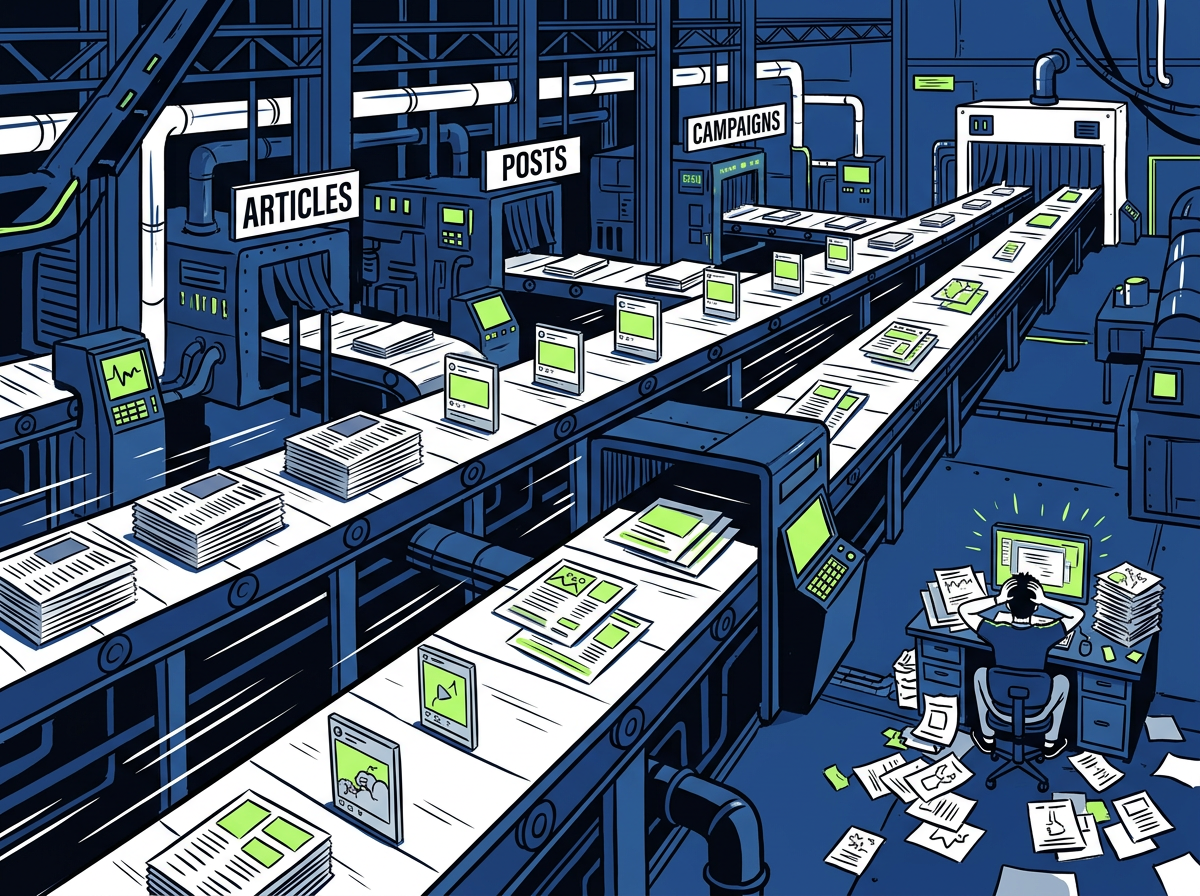
One of the biggest challenges in content marketing isn’t creating content. It’s keeping everything consistent as you scale. At the beginning, it’s manageable. You know your voice, your messaging is clear, and every piece of content feels intentional. But as output increases, cracks start to show. Tone shifts. Messaging drifts. Content starts to feel less like your brand and more like a collection of disconnected ideas.
This problem becomes even more noticeable when using AI. Without a clear system to define how your brand should look, sound, and communicate, AI-generated content tends to default to something generic. It may be technically correct, but it lacks identity.
- Brand consistency breaks at scale when there is no clear system defining voice, messaging, and identity.
- AI-generated content defaults to generic output without strong, structured brand context.
- Defining brand identity, voice, visuals, and messaging upfront ensures consistent content across all channels.
- Centralizing brand rules into a system eliminates the need for constant manual editing as output grows.
- Scalable content requires aligning messaging and audience targeting from the start to maintain relevance and recognition.
Understanding why brand context matters in AI-generated content
AI does not inherently understand your brand. It relies entirely on the inputs and structure you provide.
If those inputs are vague or incomplete, the output will reflect that.
This is why brand context is not just a “nice to have.” It directly impacts:
- How your content sounds
- What messaging gets reinforced
- How consistent your output feels across channels
- Whether your audience recognizes your brand over time
Establishing this context early allows your marketing system to produce content that is aligned, repeatable, and recognizable.
Moving from generic output to brand-aligned content
Most teams try to solve inconsistency by editing content after it is created. While this works in the short term, it does not scale.
A more effective approach is to define your brand at the system level, so every output starts from the right foundation.
This is where structured environments like Helm’s Brand Portal come into play. Instead of adjusting content manually each time, you configure the rules once and allow the system to follow them consistently.
Defining your brand at the source
The first step in creating consistent output is clearly defining your brand identity.
Within the Brand Portal, this starts with foundational elements such as your site name, business description, and overall positioning. These inputs help the system understand what your business does and how it should be presented.
Visual guidelines are also established at this stage. Uploading your logo, colors, and typography ensures that generated assets and content maintain a cohesive look across different formats.
Most importantly, brand voice is defined here. This directly influences how content is written, including tone, phrasing, and overall style. A clearly defined voice reduces the need for repeated revisions later .
Replacing generic visuals with brand-specific assets
Content is not only about what is written. Visuals play a significant role in how your brand is perceived.
Relying on generic stock images can make even well-written content feel disconnected. To address this, the Brand Portal allows you to upload your own images and brand assets.
These assets are then matched automatically to relevant content, helping ensure that what you publish feels authentic and tailored to your business rather than assembled from generic components .
Turning messaging into a repeatable system
Consistency in messaging is often harder to maintain than tone or visuals.
As more content is created, it becomes easy to drift away from core differentiators or introduce language that does not fully align with your brand.
The Content Strategy section within the Brand Portal acts as a centralized playbook. This is where you define:
- Key messaging and differentiators
- Core talking points that should appear across content
- Words or phrases to avoid through content filters
By setting these rules upfront, you ensure that every piece of content reinforces the same narrative, even as output scales .
Creating content that actually speaks to the right audience
Even with strong messaging, content will fall short if it is not targeted correctly.
Defining your audience and personas allows the system to tailor content based on who you are trying to reach. This includes identifying primary and secondary audiences, along with their needs, preferences, and expectations.
With this information in place, content becomes more focused and relevant. Instead of broad, generalized messaging, it speaks directly to the people most likely to engage with your business .
Common mistakes that weaken brand consistency
Even with the right tools in place, certain mistakes can limit effectiveness:
1. Leaving brand voice too vague
Generic descriptions lead to generic outputs.
2. Skipping asset uploads
Without real visuals, content relies heavily on stock imagery.
3. Not defining clear messaging
This results in inconsistent positioning across different pieces of content.
4. Ignoring audience segmentation
Content becomes broad instead of targeted and relevant.
Avoiding these issues ensures that your system produces content that remains aligned over time.
Building a brand system that scales with you
Brand consistency is not something you maintain manually at scale. It is something you build into your system from the start.
By defining identity, assets, messaging, and audience in a structured way, you create a foundation that supports consistent output without constant intervention.
The Brand Portal within Helm is designed to serve exactly this purpose. It centralizes everything that defines your brand so that every piece of content, whether automated or manual, aligns with how your business should be represented.
When this foundation is in place, scaling content no longer comes at the cost of consistency. Instead, both grow together.
Get free resources, access to new features, tips & tricks, and special offers by joining the Helm Newsletter.
No Spam. Sent Weekly.